
how to identify original Rudraksha

Discover helpful guides on how to identify original Rudraksha, check Rudraksha authenticity, distinguish real Rudraksha from fake beads, and understand important features such as natural mukhi lines, texture, structure and traditional identification methods.

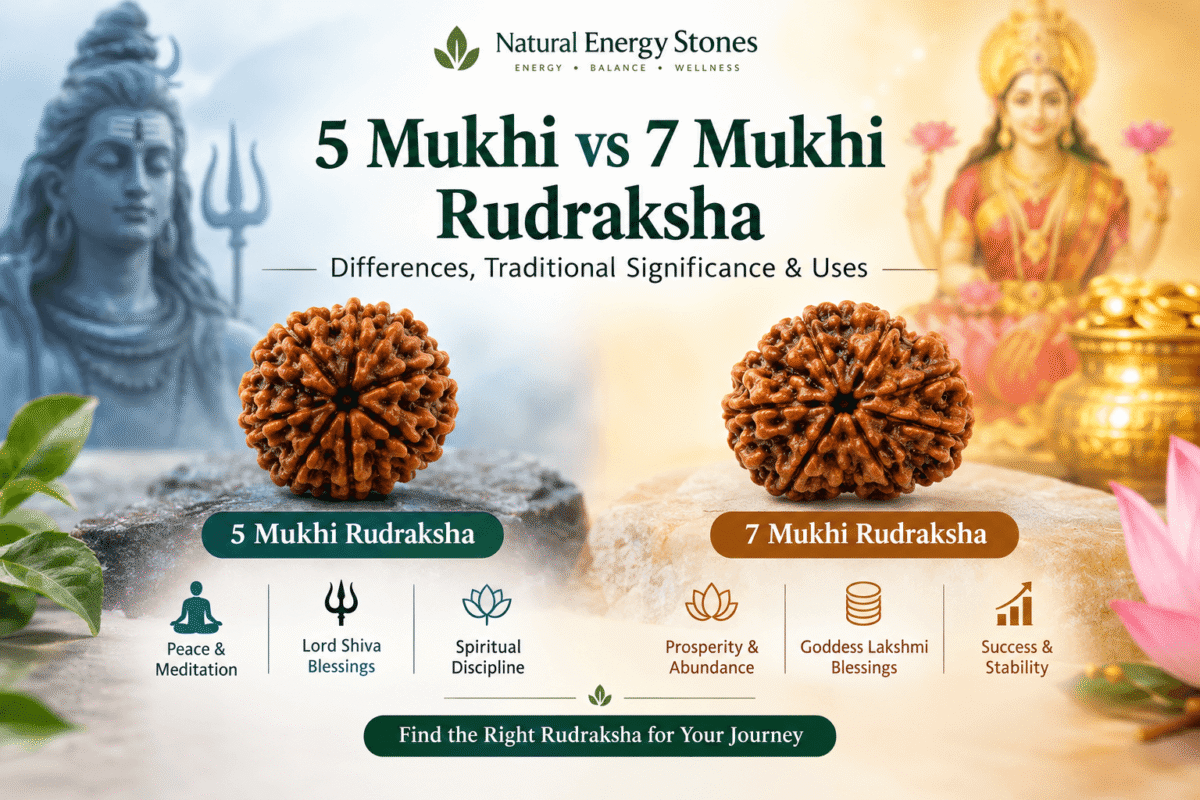
5 Mukhi vs 7 Mukhi Rudraksha: Differences, Traditional Significance & Uses

5 Mukhi vs 7 Mukhi Rudraksha: Differences, Traditional Significance & Uses

5 Mukhi vs 7 Mukhi Rudraksha: Differences, Traditional Significance & Uses Rudraksha beads hold a special place in Hindu spirituality and are widely used for meditation, mantra chanting, prayer and devotional practices. Among the different types of Rudraksha, the 5 Mukhi Rudraksha and 7 Mukhi Rudraksha are popular choices for people seeking spiritual growth, inner balance and traditional astrological guidance. Although both beads are associated with sacred Hindu traditions, they have different traditional meanings, deity associations and purposes. The 5 Mukhi Rudraksha, also known as Panchmukhi Rudraksha, is commonly associated with Lord Shiva, meditation and spiritual discipline. The 7 Mukhi Rudraksha, also called Saptamukhi Rudraksha, is traditionally associated with Goddess Mahalakshmi and is often chosen by devotees seeking prosperity, stability and abundance. If you are wondering about the difference between 5 Mukhi and 7 Mukhi Rudraksha, their traditional benefits, how to wear them or which Rudraksha may suit your spiritual practice, this detailed guide will help you understand both beads. What Is Rudraksha? Understanding the Meaning of Mukhi Rudraksha beads are the dried seeds of the Elaeocarpus ganitrus tree. They are traditionally valued in Hinduism, particularly in Shaiva traditions, where devotees associate them with Lord Shiva and use them during prayer, meditation, and mantra chanting. The word Mukhi refers to the natural divisions or faces visible on the surface of a Rudraksha bead. These divisions generally run from one end of the bead to the other. For example: 5 Mukhi Rudraksha: A bead with five natural faces or divisions. 7 Mukhi Rudraksha: A bead with seven natural faces or divisions. The number of natural faces is the primary feature used to distinguish these two Rudraksha types. Their traditional spiritual interpretations differ, which is why devotees may choose one over the other according to their beliefs and intentions. If you want to explore different varieties before making a choice, visit the Natural Energy Stones Rudraksha Collection. 5 Mukhi vs 7 Mukhi Rudraksha: Key Differences The main difference between these Rudraksha beads lies in their traditional symbolism and the intentions with which devotees commonly wear them. Feature 5 Mukhi Rudraksha 7 Mukhi Rudraksha Traditional name Panchmukhi Rudraksha Saptamukhi Rudraksha Number of faces Five Seven Traditional deity association Lord Shiva, often in the form of Kalagni Rudra Goddess Mahalakshmi in many popular traditions Common spiritual association Meditation, devotion, inner peace and spiritual discipline Prosperity, abundance, stability and overcoming difficulties Common intention Building a regular spiritual routine Focusing on prosperity and material stability alongside spiritual practice Typical use Japa mala, bracelet or pendant Individual bead, bracelet or mala, depending on availability Suitable for People beginning or maintaining a spiritual practice People drawn to the traditional symbolism of prosperity and stability Selection priority Natural five-faced bead and verified authenticity Natural seven-faced bead and verified authenticity These descriptions reflect commonly followed religious and spiritual interpretations. Customs and associations can vary between traditions, teachers and regional practices. 5 Mukhi Rudraksha: Traditional Significance and Uses The 5 Mukhi Rudraksha is among the most widely recognised Rudraksha beads. It is often called Panchmukhi Rudraksha and is traditionally associated with Kalagni Rudra, a form of Lord Shiva. For devotees, this sacred bead represents spiritual discipline, devotion and the cultivation of a calmer, more mindful lifestyle. It is commonly incorporated into daily prayer, meditation and mantra chanting. Traditional significance of 5 Mukhi Rudraksha The five-faced Rudraksha is associated with several spiritual intentions: Meditation and mindfulness: Devotees often use Panchmukhi Rudraksha during meditation as a reminder to remain attentive and consistent with their practice. Mantra chanting: A 5 Mukhi Rudraksha mala is commonly used to count repetitions of sacred mantras, including Om Namah Shivaya. Spiritual discipline: Wearing a Rudraksha may serve as a personal reminder to practise patience, self-awareness and devotion. Inner peace: In spiritual traditions, the bead is associated with cultivating mental calmness and maintaining balance during everyday challenges. Devotional connection with Lord Shiva: Many Shiva devotees wear five-faced Rudraksha beads as part of their personal religious practice. These are traditional and faith-based associations, not guaranteed medical or psychological outcomes. Who should consider wearing 5 Mukhi Rudraksha? The 5 Mukhi Rudraksha may appeal to: Beginners who want to incorporate Rudraksha into their daily spiritual routine. Devotees who regularly worship Lord Shiva. People who practise mantra chanting, yoga or meditation. Individuals who prefer a commonly worn Rudraksha for everyday devotional use. Those who want a simple spiritual accessory that reminds them of their personal intentions. There is no need to choose a bead solely because it is popular. Your religious tradition, personal preference, comfort and the authenticity of the product are more useful considerations. Explore 5 Mukhi Rudraksha products If you prefer a wearable option, explore the 5 Mukhi Rudraksha Bracelet in Adjustable Red Thread. Its bracelet format is convenient for people who prefer wearing Rudraksha rather than carrying a separate bead. For mantra chanting and devotional practice, you can also browse the Rudraksha collection to explore available malas and other Rudraksha products. 7 Mukhi Rudraksha: Traditional Significance and Uses The 7 Mukhi Rudraksha, known as Saptamukhi Rudraksha, has a distinct place in popular Rudraksha traditions. It is commonly associated with Goddess Mahalakshmi, who represents wealth, abundance, good fortune and prosperity in Hindu belief. For this reason, the seven-faced Rudraksha is often selected by devotees who want a spiritual reminder of their aspirations for financial stability, responsible decision-making and a balanced approach to material and spiritual life. Traditional significance of 7 Mukhi Rudraksha The seven-faced Rudraksha is traditionally connected with several themes. Prosperity and abundance: Its association with Goddess Mahalakshmi makes it popular among devotees who include prosperity-focused prayers in their spiritual routines. Financial stability: Some traditions recommend this bead as a devotional symbol for people working towards stability and overcoming financial difficulties. It should not be considered a guarantee of income or wealth. Perseverance: The bead may serve as a personal reminder to approach professional and financial challenges with patience, discipline and consistency. Overcoming obstacles: In certain spiritual and astrological traditions, devotees associate the seven-faced Rudraksha with navigating difficult circumstances.

5 Mukhi vs 7 Mukhi Rudraksha: Differences, Traditional Significance & Uses Read More »
How to Identify Original Rudraksha: 10 Authenticity Tests Before Buying

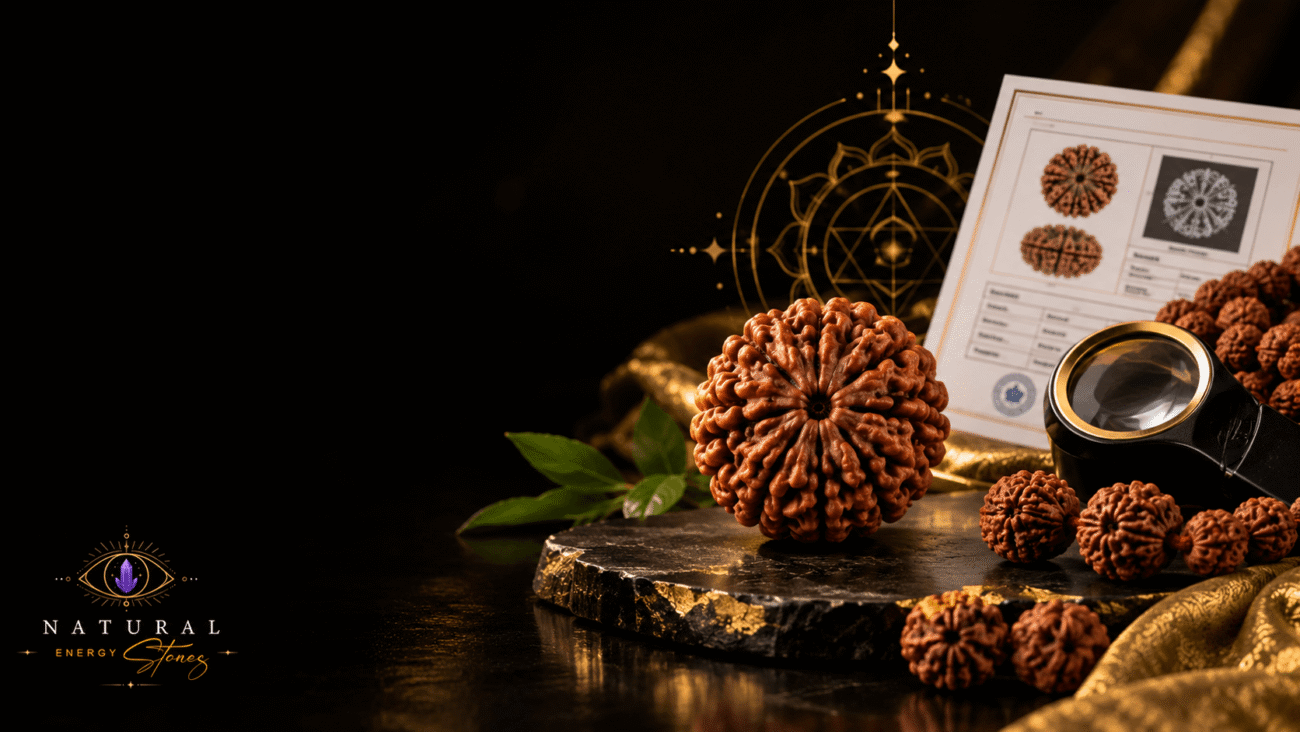
How to Identify Original Rudraksha: 10 Authenticity Tests Before Buying

How to Identify Original Rudraksha: 10 Authenticity Tests Before Buying Rudraksha beads have been revered for centuries in Hindu spiritual traditions and are commonly used for meditation, mantra chanting, prayer and devotional practices. Because of their growing popularity, many people searching for original Rudraksha online also face an important question: How can you identify a genuine Rudraksha and avoid buying a fake bead? Whether you are looking for a 5 Mukhi Rudraksha, Rudraksha Mala, Rudraksha Pendant or another Mukhi Rudraksha, understanding basic authenticity checks can help you make a more informed purchase. The market can contain artificially carved beads, moulded or imitation beads, altered natural seeds and other products that may look similar to genuine Rudraksha. Therefore, simply looking at the colour or performing one popular home test is not enough. In this detailed guide, we explain 10 ways to check Rudraksha authenticity, what you can inspect at home, which popular tests should be treated cautiously, and why professional certification can provide greater confidence. Important: Home inspection can help identify obvious irregularities, but it cannot always prove authenticity. For valuable or rare Rudraksha, professional laboratory testing and a verifiable authenticity report are much stronger forms of verification. What Is an Original Rudraksha? Rudraksha is a natural seed traditionally associated with the Rudraksha tree, botanically known as Elaeocarpus ganitrus. The bead has naturally formed vertical clefts or faces known as Mukhi. For example: A 5 Mukhi Rudraksha has five natural Mukhi divisions. A 7 Mukhi Rudraksha has seven natural Mukhi divisions. An 11 Mukhi Rudraksha has eleven natural Mukhi divisions. The number of Mukhi is an important characteristic of a Rudraksha. However, simply counting the visible lines is not always sufficient because artificial grooves can be carved into a natural bead. This is why original Rudraksha identification should involve more than one visual check. If you are looking for authentic Rudraksha products for meditation or spiritual practice, you can explore the Rudraksha collection at Natural Energy Stones. Why Is It Important to Identify Original Rudraksha? Buying a genuine Rudraksha is important for several reasons. First, buyers want to know that the product they receive is actually the natural seed described by the seller. Second, the Mukhi count can significantly affect how a Rudraksha is classified and valued. Artificially adding grooves to a lower-Mukhi bead can make it appear to be a rarer Rudraksha. Third, online photographs can sometimes make it difficult for a beginner to distinguish between natural and artificially modified beads. A genuine-looking surface does not necessarily prove what is inside the bead. Therefore, when buying genuine Rudraksha online, look beyond attractive photographs and low prices. Check the product description, seller transparency, authenticity information and, where appropriate, laboratory certification. 10 Tests to Identify an Original Rudraksha 1. Check the Natural Mukhi Lines The first step in original Rudraksha identification is to carefully examine the Mukhi lines. Mukhi lines are the natural vertical divisions running across the Rudraksha bead. A genuine Rudraksha generally has naturally formed grooves with variations in: Depth Width Texture Shape Direction Surface pattern Natural formations are rarely perfectly uniform. Use your eyes first and, if necessary, a magnifying glass or smartphone macro camera to inspect the bead more closely. What should you look for? The Mukhi divisions should appear naturally formed rather than looking like perfectly machine-cut grooves. Be cautious if: Lines appear unnaturally straight or uniform. Grooves look freshly carved. The surface appears excessively smooth. Several beads have exactly the same artificial-looking pattern. Additional Mukhi lines appear suspiciously shallow compared with the natural grooves. However, visual inspection is only a screening method, not definitive proof. A sophisticated alteration may not be obvious to an inexperienced buyer. 2. Check Whether the Mukhi Lines Run Naturally Across the Bead When learning how to identify original Rudraksha, don’t simply count the visible lines. Follow each Mukhi from one end of the bead toward the other. Natural Mukhi divisions generally follow the bead’s natural structure. If a line suddenly stops, changes character, looks freshly cut or appears disconnected from the rest of the surface, investigate further. Artificially carved Rudraksha can sometimes have additional grooves added to change the apparent Mukhi count. A useful inspection technique Place the bead under bright natural light and slowly rotate it. Look at: The top The bottom Each Mukhi division The grooves around the entire circumference The drilling hole The surface texture This gives you a much better inspection than looking at only one photograph. 3. Examine the Surface Texture One of the useful ways to distinguish a real Rudraksha vs fake Rudraksha is to examine its overall texture. Natural Rudraksha seeds generally have an organic, irregular surface. You may notice: Small natural ridges Uneven textures Natural depressions Minor variations Organic-looking patterns Artificial moulded beads may appear excessively uniform. However, remember that natural Rudraksha can also be cleaned, polished or treated, so surface appearance alone should never be treated as absolute proof. Avoid judging authenticity only by colour Rudraksha beads can naturally vary in colour and appearance. Depending on age, drying, cleaning and handling, beads may appear: Light brown Medium brown Dark brown Reddish brown Deep brown Therefore, colour alone cannot determine whether a Rudraksha is original. 4. Inspect the Drilling Hole The hole through a Rudraksha is another area worth examining. Look carefully at the opening where the thread passes through. Check whether: The hole appears consistent with the bead’s natural structure. There are obvious signs of glue or filler. The drilling appears excessively rough. The hole seems to have damaged important Mukhi divisions. There are suspicious artificial materials inside the bead. A clean, drilled Rudraksha can naturally have a hole because many beads are prepared for malas, bracelets and pendants. Therefore, a drilled hole does not mean that a Rudraksha is fake. The goal is simply to look for unusual signs of modification. 5. Examine the Bead Under Magnification If you have a magnifying glass or jeweller’s loupe, use it. Magnification can reveal details that are difficult to see with the naked

How to Identify Original Rudraksha: 10 Authenticity Tests Before Buying Read More »

Natural Energy Stones, covered image
SPECIAL OFFER FOR YOU ✨

5% EXTRA OFF

Choose Prepaid Payment & Get 5% EXTRA OFF + FREE SHIPPING on Natural Energy Stones, Rudraksha & Spiritual Products.

COUPON: PREPAID5