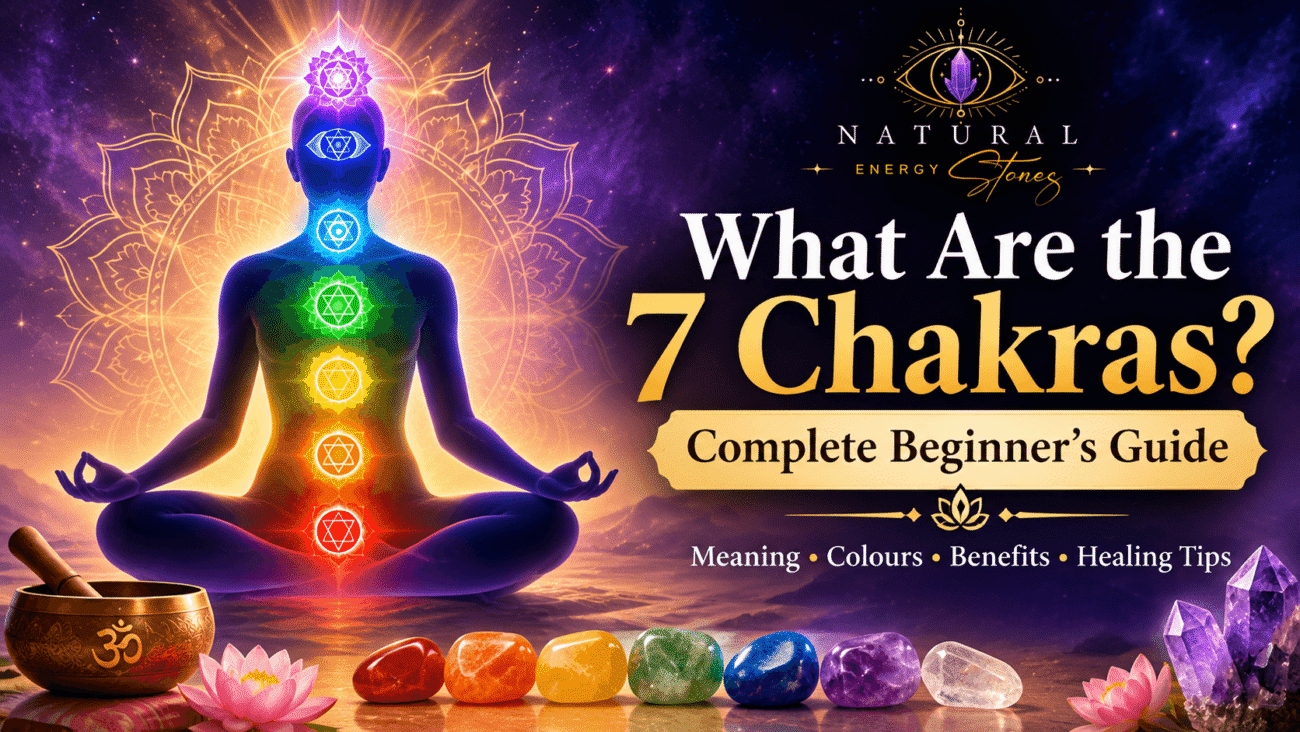
What Are the 7 Chakras? Complete Beginner’s Guide to Their Meaning, Colours, Benefits and Healing
Have you ever felt emotionally overwhelmed, mentally exhausted, disconnected from yourself or unable to find inner peace? In spiritual traditions, these experiences are sometimes explored through the concept of chakras — seven important energy centres associated with different aspects of our physical, emotional and spiritual well-being.
The word Chakra comes from Sanskrit and means “wheel”. According to traditional Indian spiritual philosophies and yogic practices, chakras are described as spinning energy centres located along the central axis of the body, from the base of the spine to the crown of the head.
The seven chakras represent different aspects of human experience, including security, creativity, confidence, love, communication, intuition and spiritual awareness.
Understanding the seven chakras is a wonderful starting point for anyone interested in meditation, yoga, mindfulness, spiritual growth and crystal healing.
In this beginner-friendly guide, we will explore what the 7 chakras are, their locations, colours, meanings, associated elements, signs of imbalance and the crystals traditionally connected with each energy centre.
Whether you are completely new to chakra healing or looking to deepen your spiritual knowledge, this guide will help you understand the fascinating world of the seven chakras.
What Are the 7 Chakras in the Human Body?
The seven chakras are traditionally understood as seven major energy centres within the subtle body. Each chakra is associated with particular emotional, psychological and spiritual qualities.
They are arranged vertically along the body’s central axis, beginning at the base of the spine and extending to the crown of the head.
Here are the seven chakras in order:
Root Chakra (Muladhara) – Security and Stability
Sacral Chakra (Svadhisthana) – Creativity and Emotions
Solar Plexus Chakra (Manipura) – Confidence and Personal Power
Heart Chakra (Anahata) – Love and Compassion
Throat Chakra (Vishuddha) – Communication and Expression
Third Eye Chakra (Ajna) – Intuition and Awareness
Crown Chakra (Sahasrara) – Spiritual Connection and Consciousness
Each chakra has a traditionally associated colour, Sanskrit name, symbolic meaning and element or other traditional correspondence.
Understanding these seven energy centres can help you explore self-awareness and develop a more mindful spiritual practice.
Understanding the 7 Chakras: Names, Colours and Meanings
Let’s explore each of the seven chakras in detail, including its meaning, location, colour, associated qualities and crystals traditionally used in chakra meditation.
1. Root Chakra (Muladhara) – The Chakra of Stability and Security
Sanskrit Name: Muladhara
Location: Base of the spine
Colour: Red
Element: Earth
Traditional Symbol: Four-petalled lotus
Main Meaning: Security, stability, survival and grounding
The Root Chakra is the first chakra and forms the foundation of the entire chakra system. It represents our connection with the physical world, sense of security and ability to feel grounded.
In traditional chakra teachings, a balanced Root Chakra is associated with feeling safe, stable, confident and connected to your surroundings.
It is also connected with basic needs such as shelter, food, financial security and a sense of belonging.
Signs of a Balanced Root Chakra
Feeling secure and grounded.
Having confidence in your decisions.
Maintaining emotional stability.
Feeling connected to your surroundings.
Developing a sense of discipline and consistency.
Signs of an Imbalanced Root Chakra
Constant feelings of insecurity.
Fear of uncertainty and change.
Difficulty feeling settled.
Lack of confidence in everyday decisions.
Feeling disconnected or restless.
Best Crystals for Root Chakra
In crystal healing traditions, red and dark-coloured stones are commonly associated with grounding and stability.
Red Jasper – Traditionally associated with strength, stability and grounding.
Black Tourmaline – Associated with grounding and protection.
Black Obsidian – Traditionally connected with self-reflection and grounding.
Smoky Quartz – Associated with stability and emotional grounding.
For someone beginning their crystal journey, a Natural Tiger Eye Bracelet can also be a meaningful addition to a grounding and confidence-focused spiritual routine.
How to Balance the Root Chakra
Practise grounding meditation.
Spend time walking in nature.
Try yoga poses such as Mountain Pose and Tree Pose.
Maintain a consistent daily routine.
Practise mindful breathing.
Use grounding crystals during meditation.
Root Chakra Affirmation:
“I am safe, secure, grounded and connected to the present moment.”
2. Sacral Chakra (Svadhisthana) – The Chakra of Creativity and Emotions
Sanskrit Name: Svadhisthana
Location: Lower abdomen, below the navel
Colour: Orange
Element: Water
Traditional Symbol: Six-petalled lotus
Main Meaning: Creativity, emotions, pleasure and relationships
The Sacral Chakra is the second energy centre in the traditional seven-chakra system. It is associated with creativity, emotional expression, sensuality and the ability to enjoy life’s experiences.
This chakra is also connected with relationships, personal desires, imagination and adaptability.
A balanced Sacral Chakra is traditionally associated with healthy emotional expression, creative thinking and the ability to experience joy without excessive guilt or attachment.
Signs of a Balanced Sacral Chakra
Healthy emotional expression.
Creativity and imagination.
Confidence in personal relationships.
Ability to enjoy life’s experiences.
Healthy boundaries and emotional flexibility.
Signs of an Imbalanced Sacral Chakra
Difficulty expressing emotions.
Creative blocks.
Feelings of guilt or emotional dissatisfaction.
Difficulty maintaining healthy boundaries.
Excessive emotional attachment.
Best Crystals for Sacral Chakra
Orange-coloured crystals are traditionally associated with the Sacral Chakra.
Carnelian – Creativity, motivation and confidence.
Orange Calcite – Joy, enthusiasm and emotional expression.
Sunstone – Optimism, vitality and positivity.
Moonstone – Emotional awareness and intuition.
Natural Energy Stones offers a selection of natural gemstones and crystal accessories through its healing crystal collection, where you can explore stones that complement your personal meditation and intention-setting practices.
How to Balance the Sacral Chakra
Explore creative activities such as painting, dancing or writing.
Practise hip-opening yoga poses.
Spend time near water.
Allow yourself to express emotions without judgment.
Practise mindful self-care.
Meditate while focusing on the colour orange.
Sacral Chakra Affirmation:
“I embrace my creativity, express my emotions freely and welcome joy into my life.”
Solar Plexus Chakra (Manipura) – The Chakra of Confidence and Personal Power
Sanskrit Name: Manipura
Location: Upper abdomen, around the stomach area
Colour: Yellow
Element: Fire
Traditional Symbol: Ten-petalled lotus
Main Meaning: Confidence, willpower, determination and personal identity
The Solar Plexus Chakra is the third chakra and is traditionally associated with personal power, self-confidence, ambition and determination.
It represents how we see ourselves, how confidently we make decisions and how we take responsibility for our actions.
When this chakra is balanced, a person may feel motivated, independent, confident and capable of pursuing personal and professional goals.
Signs of a Balanced Solar Plexus Chakra
Strong self-confidence.
Healthy self-esteem.
Clear decision-making.
Motivation to achieve goals.
Ability to take responsibility.
A healthy sense of independence.
Signs of an Imbalanced Solar Plexus Chakra
Self-doubt and insecurity.
Fear of failure.
Lack of motivation.
Difficulty making decisions.
Excessive need for control.
Feeling powerless in challenging situations.
Best Crystals for Solar Plexus Chakra
Yellow and golden-coloured crystals are traditionally connected with this chakra.
Citrine – Abundance, positivity and confidence.
Tiger Eye – Courage, determination and personal power.
Yellow Jasper – Stability, optimism and confidence.
Pyrite – Ambition, strength and prosperity.
If you are working on confidence, determination and personal growth, the Natural Tiger Eye Bracelet is a popular crystal accessory to explore. Tiger Eye is traditionally associated with courage, focus and confidence.
How to Balance the Solar Plexus Chakra
Practise confidence-building affirmations.
Set realistic goals and work towards them.
Spend time in sunlight.
Practise core-strengthening yoga poses.
Develop healthy personal boundaries.
Celebrate small achievements.
Solar Plexus Chakra Affirmation:
“I am confident, powerful, capable and worthy of success.”
Heart Chakra (Anahata) – The Chakra of Love and Compassion
Sanskrit Name: Anahata
Location: Centre of the chest
Colour: Green (sometimes represented with pink)
Element: Air
Traditional Symbol: Twelve-petalled lotus
Main Meaning: Love, compassion, forgiveness and emotional connection
The Heart Chakra is the fourth chakra and is considered an important connection between the lower three chakras, associated with physical and personal experiences, and the upper three chakras, associated with communication, awareness and spirituality.
It represents unconditional love, kindness, compassion, forgiveness and emotional connection.
The Heart Chakra is not only about romantic relationships. It also represents self-love, family connections, friendship, empathy and the ability to forgive.
Signs of a Balanced Heart Chakra
Ability to give and receive love.
Healthy emotional connections.
Compassion towards others.
Self-acceptance and self-love.
Willingness to forgive.
Emotional openness.
Signs of an Imbalanced Heart Chakra
Difficulty trusting others.
Fear of emotional attachment.
Holding onto past hurt.
Feelings of loneliness.
Difficulty practising self-love.
Emotional withdrawal.
Best Crystals for Heart Chakra
Green and pink crystals are traditionally associated with love and emotional harmony.
Rose Quartz – Love, compassion and self-love.
Green Aventurine – Growth, harmony and optimism.
Rhodonite – Forgiveness and emotional understanding.
Jade – Harmony, balance and good fortune.
One of the most popular stones associated with the Heart Chakra is Rose Quartz. You can explore the Natural Rose Quartz Bracelet as a meaningful accessory for self-love, compassion and relationship-focused intentions.
How to Balance the Heart Chakra
Practise gratitude every day.
Spend time with loved ones.
Develop a habit of self-care.
Practise forgiveness.
Perform small acts of kindness.
Meditate while focusing on the centre of your chest.
Heart Chakra Affirmation:
“I give and receive love freely. My heart is open to compassion, kindness and happiness.”
Throat Chakra (Vishuddha) – The Chakra of Communication and Truth
Sanskrit Name: Vishuddha
Location: Throat region
Colour: Blue
Element: Ether or Space
Traditional Symbol: Sixteen-petalled lotus
Main Meaning: Communication, honesty, self-expression and truth
The Throat Chakra is the fifth chakra and is traditionally associated with communication, honesty and self-expression.
It represents our ability to express thoughts, communicate emotions, speak confidently and listen to others.
A balanced Throat Chakra is associated with clear communication, authentic self-expression and the courage to speak honestly while respecting others.
Signs of a Balanced Throat Chakra
Clear and confident communication.
Ability to express thoughts and emotions.
Honest conversations.
Good listening skills.
Confidence in public speaking.
Respectful self-expression.
Signs of an Imbalanced Throat Chakra
Fear of speaking up.
Difficulty expressing feelings.
Hesitation during conversations.
Fear of judgment.
Dishonest or unclear communication.
Difficulty listening to others.
Best Crystals for Throat Chakra
Blue-coloured crystals are traditionally associated with communication and self-expression.
Blue Lace Agate – Calm communication and emotional expression.
Aquamarine – Clarity, courage and honest communication.
Sodalite – Logical thinking and clear expression.
Lapis Lazuli – Wisdom, truth and self-awareness.
How to Balance the Throat Chakra
Practise speaking honestly.
Write your thoughts in a journal.
Try chanting or mantra meditation.
Sing or practise vocal exercises.
Develop active listening habits.
Speak your boundaries respectfully.
Throat Chakra Affirmation:
“I express myself with confidence, honesty, kindness and clarity.”
Third Eye Chakra (Ajna) – The Chakra of Intuition and Awareness
Sanskrit Name: Ajna
Location: Between the eyebrows
Colour: Indigo
Element: Traditionally associated with the mind and inner awareness
Traditional Symbol: Two-petalled lotus
Main Meaning: Intuition, wisdom, imagination and perception
The Third Eye Chakra is the sixth chakra and is traditionally associated with intuition, inner awareness, wisdom and perception.
It represents our ability to look beyond immediate appearances, reflect deeply and develop a clearer understanding of ourselves and the world around us.
In spiritual practices, the Third Eye Chakra is also connected with meditation, visualisation, concentration and intuitive awareness.
Signs of a Balanced Third Eye Chakra
Clear thinking and self-awareness.
Strong imagination.
Ability to reflect before making decisions.
Openness to learning.
Focus and concentration.
Greater awareness of personal thoughts and emotions.
Signs of an Imbalanced Third Eye Chakra
Difficulty concentrating.
Excessive overthinking.
Lack of clarity.
Difficulty trusting personal judgment.
Feeling disconnected from your goals.
Confusion about decisions.
Best Crystals for Third Eye Chakra
Indigo, purple and other traditionally spiritual stones are commonly associated with the Third Eye Chakra.
Amethyst – Intuition, calmness and spiritual awareness.
Lapis Lazuli – Wisdom and self-awareness.
Fluorite – Clarity and concentration.
Labradorite – Intuition and transformation.
Amethyst is particularly popular among people who enjoy meditation and spiritual practices. Explore the Natural Energy Stones Amethyst collection to discover crystals that can complement your meditation routine.
How to Balance the Third Eye Chakra
Practise mindfulness meditation.
Spend a few minutes in silence every day.
Reduce unnecessary digital distractions.
Maintain a meditation journal.
Practise visualisation.
Focus on developing self-awareness rather than overthinking.
Third Eye Chakra Affirmation:
“I trust my inner wisdom, embrace awareness and see my path with clarity.”
Crown Chakra (Sahasrara) – The Chakra of Spiritual Connection
Sanskrit Name: Sahasrara
Location: Crown of the head
Colour: Violet or White
Element: Often associated with pure consciousness rather than a physical element
Traditional Symbol: Thousand-petalled lotus
Main Meaning: Spiritual awareness, enlightenment, consciousness and connection
The Crown Chakra is the seventh and highest chakra in the commonly described seven-chakra system.
It represents spiritual awareness, higher consciousness, wisdom and a deeper connection with existence.
In traditional spiritual teachings, the Crown Chakra is associated with self-realisation, inner peace and the understanding that life is connected to something greater than individual identity.
It is often explored through meditation, contemplation, prayer and spiritual practices.
Signs of a Balanced Crown Chakra
A sense of inner peace.
Interest in spiritual growth.
Greater self-awareness.
Openness to wisdom and learning.
Feeling connected with life.
A sense of purpose and meaning.
Signs of an Imbalanced Crown Chakra
Feeling disconnected from personal purpose.
Lack of interest in self-reflection.
Spiritual confusion.
Excessive attachment to material concerns.
Difficulty finding meaning in experiences.
Best Crystals for Crown Chakra
Violet, white and clear crystals are traditionally associated with the Crown Chakra.
Amethyst – Spiritual awareness and meditation.
Clear Quartz – Clarity and intention-setting.
Selenite – Purity and spiritual reflection.
White Howlite – Calmness and mindfulness.
Clear Quartz is particularly popular because of its traditional association with clarity and amplification. You can explore the Natural Clear Quartz Crystal Collection for stones to incorporate into your meditation space.
How to Balance the Crown Chakra
Practise silent meditation.
Spend time in prayer or contemplation.
Develop a gratitude practice.
Read spiritual literature.
Practise mindfulness.
Spend time reflecting on your values and purpose.
Crown Chakra Affirmation:
“I am connected with my higher self and open to wisdom, peace and spiritual growth.”
Quick Comparison: All 7 Chakras, Their Colours and Crystals
Here is a simple reference table to help beginners remember the seven chakras.
| Chakra | Colour | Main Association | Popular Crystal |
|---|---|---|---|
|
Root |
Red |
Stability |
Red Jasper |
|
Sacral |
Orange |
Creativity |
Carnelian |
|
Solar Plexus |
Yellow |
Confidence |
Citrine |
|
Heart |
Green |
Love |
Rose Quartz |
|
Throat |
Blue |
Communication |
Blue Lace Agate |
|
Third Eye |
Indigo |
Intuition |
Amethyst |
|
Crown |
Violet / White |
Spirituality |
Clear Quartz |
Remember that crystal associations can vary between spiritual traditions and individual practitioners.
What Happens When All 7 Chakras Are Balanced?
In traditional chakra philosophy, the seven energy centres are interconnected. Rather than focusing on only one chakra, many spiritual practitioners aim to develop awareness of all seven.
When you work with the seven chakras as part of a regular meditation or mindfulness practice, you can explore different aspects of your personal growth.
Here is what each chakra represents in an overall spiritual development journey:
Root Chakra: Building a sense of safety, stability and grounding.
Sacral Chakra: Understanding emotions and encouraging creativity.
Solar Plexus Chakra: Developing confidence and personal responsibility.
Heart Chakra: Practising love, forgiveness and compassion.
Throat Chakra: Communicating honestly and expressing yourself.
Third Eye Chakra: Developing awareness, reflection and intuition.
Crown Chakra: Exploring spirituality, wisdom and consciousness.
The goal of chakra balancing is not to achieve perfection. It is to become more aware of your thoughts, emotions, habits and spiritual needs.
Important: Chakras are concepts from traditional spiritual and yogic systems. There is no established scientific evidence that chakra balancing or crystals can diagnose, prevent or treat physical or mental health conditions. They can be incorporated as complementary mindfulness and spiritual practices.
How to Balance the 7 Chakras Naturally
If you are a beginner, you do not need complicated rituals or expensive spiritual tools to start exploring chakra balancing.
You can begin with simple daily practices that encourage mindfulness, self-reflection and emotional awareness.
Here are seven practical ways to work with your chakras.
1. Practise Daily Chakra Meditation
Meditation is one of the most popular ways to explore the seven chakras.
Find a quiet place, sit comfortably and focus your attention on each chakra location, beginning at the base of your spine and gradually moving towards the crown of your head.
You can visualise the traditionally associated colour of each chakra while breathing slowly.
Start with five to ten minutes daily.
2. Use Yoga for Chakra Balancing
Yoga is traditionally connected with chakra philosophy and can be incorporated into a holistic spiritual routine.
Some commonly practised poses include:
| Chakra | Suggested Yoga Pose |
|---|---|
|
Root |
Mountain Pose |
|
Sacral |
Goddess Pose |
|
Solar Plexus |
Boat Pose |
|
Heart |
Camel Pose |
|
Throat |
Fish Pose |
|
Third Eye |
Child’s Pose |
|
Crown |
Easy Seated Meditation |
Choose poses according to your physical comfort and ability. Never force a posture.
3. Use Affirmations for Each Chakra
Positive affirmations can help you reflect on your thoughts, beliefs and intentions.
Repeat a simple affirmation every morning or before meditation.
For example:
Root: I am safe and grounded.
Sacral: I embrace creativity and joy.
Solar Plexus: I believe in myself.
Heart: I welcome love and compassion.
Throat: I express myself honestly.
Third Eye: I trust my inner wisdom.
Crown: I am open to spiritual growth.
4. Practise Colour Visualisation
Every chakra is traditionally associated with a particular colour.
During meditation, visualise:
Red for grounding.
Orange for creativity.
Yellow for confidence.
Green for love.
Blue for communication.
Indigo for intuition.
Violet or white for spiritual awareness.
This simple practice can make chakra meditation easier for beginners.
5. Spend Time in Nature
Nature-based activities can be incorporated into grounding and mindfulness practices.
Try walking barefoot on safe natural surfaces, gardening, sitting under a tree or spending time in a peaceful outdoor environment.
These activities can help you slow down and become more present.
6. Incorporate Healing Crystals into Your Routine
Crystals are widely used in spiritual traditions for meditation, intention-setting and chakra-focused practices.
You can select stones based on their traditional chakra associations and use them as visual reminders of your personal intentions.
For example:
Red Jasper for Root Chakra meditation.
Carnelian for Sacral Chakra meditation.
Citrine for Solar Plexus Chakra meditation.
Rose Quartz for Heart Chakra meditation.
Blue stones for Throat Chakra meditation.
Amethyst for Third Eye Chakra meditation.
Clear Quartz for Crown Chakra meditation.
You can explore Natural Energy Stones’ collection of healing crystals and gemstone accessories to find stones that complement your spiritual routine.
7. Maintain a Healthy Daily Routine
Spiritual well-being is also connected with everyday habits.
Try to:
Maintain a consistent sleep schedule.
Eat a balanced diet.
Stay physically active.
Practise gratitude.
Maintain healthy relationships.
Make time for yourself.
Reduce unnecessary stress.
Small and consistent lifestyle changes can make a meaningful difference to your overall well-being.
What Is a 7 Chakra Bracelet?
A 7 Chakra Bracelet is a gemstone bracelet that typically combines seven different coloured stones, each representing one of the seven chakras.
These bracelets are popular among people interested in crystal healing, meditation, yoga and spiritual practices.
The seven colours traditionally represent the seven energy centres, making the bracelet a convenient way to keep chakra symbolism close throughout the day.
What Stones Are Used in a 7 Chakra Bracelet?
A traditional seven-chakra crystal bracelet may contain the following stones:
| Chakra | Commonly Used Crystal |
|---|---|
|
Root |
Red Jasper |
|
Sacral |
Carnelian |
|
Solar Plexus |
Citrine |
|
Heart |
Green Aventurine |
|
Throat |
Sodalite |
|
Third Eye |
Amethyst |
|
Crown |
Clear Quartz |
The exact stones can differ depending on the bracelet design and manufacturer.
What Are the Benefits of Wearing a 7 Chakra Bracelet?
In crystal healing traditions, wearing a 7 Chakra Bracelet is associated with the following intentions:
Chakra Awareness: Helps you connect with the symbolism of all seven energy centres.
Meditation Support: Can be used as a meaningful accessory during meditation.
Spiritual Growth: Represents an intention towards self-awareness and spiritual development.
Mindfulness: Serves as a daily reminder to focus on emotional and personal well-being.
Positive Intentions: Encourages you to remain mindful of your goals and intentions.
Personal Expression: Combines colourful natural gemstones in an attractive accessory.
These are traditional spiritual associations, not scientifically proven therapeutic benefits.
How to Choose the Right Chakra Crystal?
Choosing a chakra crystal does not have to be complicated.
If you are new to crystal healing, begin by understanding what each stone traditionally represents.
Here is a simple selection guide:
| Your Intention | Crystal to Explore |
|---|---|
|
Grounding and stability |
Red Jasper |
|
Creativity and motivation |
Carnelian |
|
Confidence and determination |
Tiger Eye |
|
Love and compassion |
Rose Quartz |
|
Communication |
Blue Lace Agate |
|
Intuition and meditation |
Amethyst |
|
Clarity and spiritual awareness |
Clear Quartz |
You can also explore the Natural Energy Stones healing crystal collection to discover different natural stones and gemstone accessories.
Beginner’s Tip: You do not need to buy all seven crystals immediately. Start with one or two stones whose traditional meanings resonate with your current intentions.
Common Mistakes Beginners Should Avoid When Practising Chakra Healing
When learning about the seven chakras, it is easy to become confused by different spiritual interpretations and online information.
Here are some common mistakes worth avoiding.
1. Trying to Balance All Seven Chakras in One Day
Chakra awareness is a personal journey. Start with simple practices and develop a consistent routine rather than trying everything at once.
2. Believing Every Negative Emotion Means a Blocked Chakra
Feeling sad, confused, nervous or frustrated is a normal part of human life. These emotions should not automatically be interpreted as signs of an imbalanced chakra.
3. Buying Too Many Crystals Without Understanding Them
Every crystal has different traditional associations. Learn about the stone before choosing it.
4. Expecting Instant Results
Meditation, yoga and mindfulness require patience and consistency. Avoid expecting immediate transformations.
5. Using Crystals as a Replacement for Medical Treatment
Crystals and chakra practices should not replace professional medical care, psychological support or prescribed treatment.
Frequently Asked Questions About the 7 Chakras
The seven chakras are traditional energy centres described in Indian spiritual and yogic philosophies. They represent different aspects of human experience, including security, creativity, confidence, love, communication, intuition and spiritual awareness.
The seven chakras in ascending order are:
Root Chakra – Muladhara
Sacral Chakra – Svadhisthana
Solar Plexus Chakra – Manipura
Heart Chakra – Anahata
Throat Chakra – Vishuddha
Third Eye Chakra – Ajna
Crown Chakra – Sahasrara
The traditional rainbow colour sequence is:
Root Chakra – Red
Sacral Chakra – Orange
Solar Plexus Chakra – Yellow
Heart Chakra – Green
Throat Chakra – Blue
Third Eye Chakra – Indigo
Crown Chakra – Violet or White
The Heart Chakra, also known as Anahata, is traditionally associated with love, compassion, forgiveness, emotional connection and self-acceptance.
Rose Quartz and Green Aventurine are among the popular crystals associated with the Heart Chakra.
The Solar Plexus Chakra, known as Manipura, is traditionally associated with confidence, willpower, ambition and personal identity.
Citrine and Tiger Eye are commonly used in crystal practices connected with this chakra.
The Third Eye Chakra, or Ajna, is associated with intuition, inner awareness, wisdom and perception.
Amethyst and Lapis Lazuli are popular crystals traditionally connected with the Third Eye Chakra.
There is no universally accepted single most powerful chakra. Each chakra has its own significance, and the traditional system views them as interconnected energy centres.
Yes. Beginners can start with simple breathing exercises, colour visualisation and mindfulness meditation. Five to ten minutes daily is a reasonable starting point.
A 7 Chakra Bracelet can generally be worn as a daily fashion or spiritual accessory, provided its materials are comfortable and suitable for your skin. Follow the manufacturer's care instructions to protect the gemstones and bracelet thread.
Clear Quartz is commonly used in crystal healing traditions for its association with clarity and amplification. A 7 Chakra Bracelet is another popular option because it combines stones representing all seven energy centres.
There is no scientifically established timeframe for chakra balancing. It is better to approach chakra meditation as an ongoing practice of mindfulness, self-reflection and personal development.
Chakra healing is a spiritual practice focused on the seven traditional energy centres. Crystal healing uses gemstones and crystals as part of meditation, intention-setting and spiritual rituals. Some practitioners combine both approaches.
Final Thoughts: Begin Your Journey Towards Understanding the 7 Chakras
Understanding the seven chakras is an interesting way to explore traditional Indian spiritual wisdom, meditation and self-awareness.
From the grounding energy of the Root Chakra to the spiritual awareness of the Crown Chakra, each energy centre represents a different aspect of personal and spiritual development.
You do not need to be an expert in meditation or crystal healing to begin. Start with simple affirmations, mindful breathing, yoga and a few minutes of daily self-reflection.
If you enjoy working with natural gemstones, you can also incorporate chakra-associated crystals into your meditation routine.
At Natural Energy Stones, we believe in bringing natural gemstones and traditional spiritual practices closer to everyday life. Explore our collection of healing crystals, gemstone bracelets and spiritual accessories to find meaningful additions to your personal spiritual journey.
Discover your connection with the seven chakras and take the first step towards a more mindful and balanced lifestyle.
Explore Natural Energy Stones – Healing Crystals & Spiritual Products